
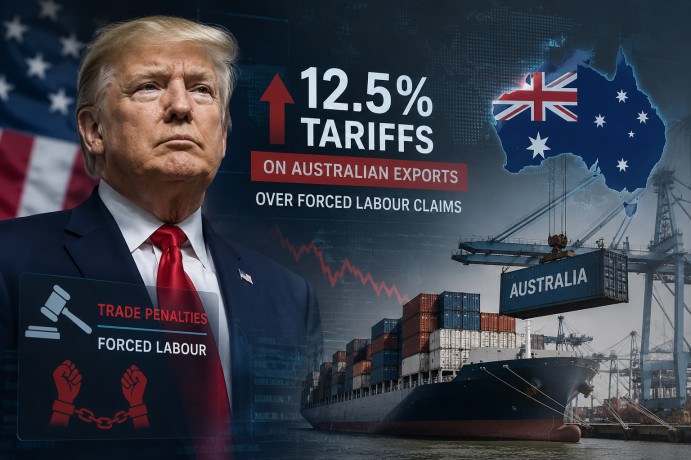
The United States has announced the implementation of a 12.5% tariff on a variety of Australian exports, citing insufficient efforts by the Australian government to keep goods produced via forced labor out of supply chains. This decision has been met with strong opposition from Australia, which argues that the tariffs are unwarranted and violate the Australia-U.S. Free Trade Agreement. Trade Minister Don Farrell emphasized that Australia maintains some of the strictest laws globally against forced labor and modern slavery, urging the U.S. to rescind the tariffs promptly.
While the new tariff affects numerous Australian exports, significant categories such as beef, gold, several agricultural products, aircraft parts, and certain mineral and industrial goods remain unaffected. Despite these exemptions, the Australian government and industry leaders have expressed concern over the lack of evidence supporting the U.S. decision, warning that it could strain bilateral trade relations.
Australian officials have criticized the U.S. move as lacking substantiation and potentially harmful to the cooperative economic ties between the two nations. Business groups and industry representatives have voiced their disapproval, labeling the tariffs as unjust and detrimental to Australian exporters.
This development is part of a broader initiative by the Trump administration to expand trade measures in relation to forced labor enforcement, impacting numerous countries. The tariffs are seen as part of a wider strategy to address forced labor issues globally, though the Australian government maintains that its current regulations are robust and effective.